
R Ball and Son Ltd · Surfacing Guide
Surface Dressing: Benefits, Suitability and What to Expect
Protecting an existing road surface starts with choosing the right treatment. Discover how a binder-and-chipping finish works, where it can help and why the condition underneath matters.
A Protective Treatment for Existing Surfaces
Weather and traffic gradually affect road surfaces. As the exposed layer wears, maintaining its texture and limiting water penetration become important considerations. The appropriate response depends on whether the problem is confined to the surface or extends deeper.
Surface dressing is a maintenance treatment for suitable existing surfaces. It can renew surface texture and provide a protective seal, but it should not be confused with rebuilding a failing road or laying a new asphalt layer.
What Is Surface Dressing?
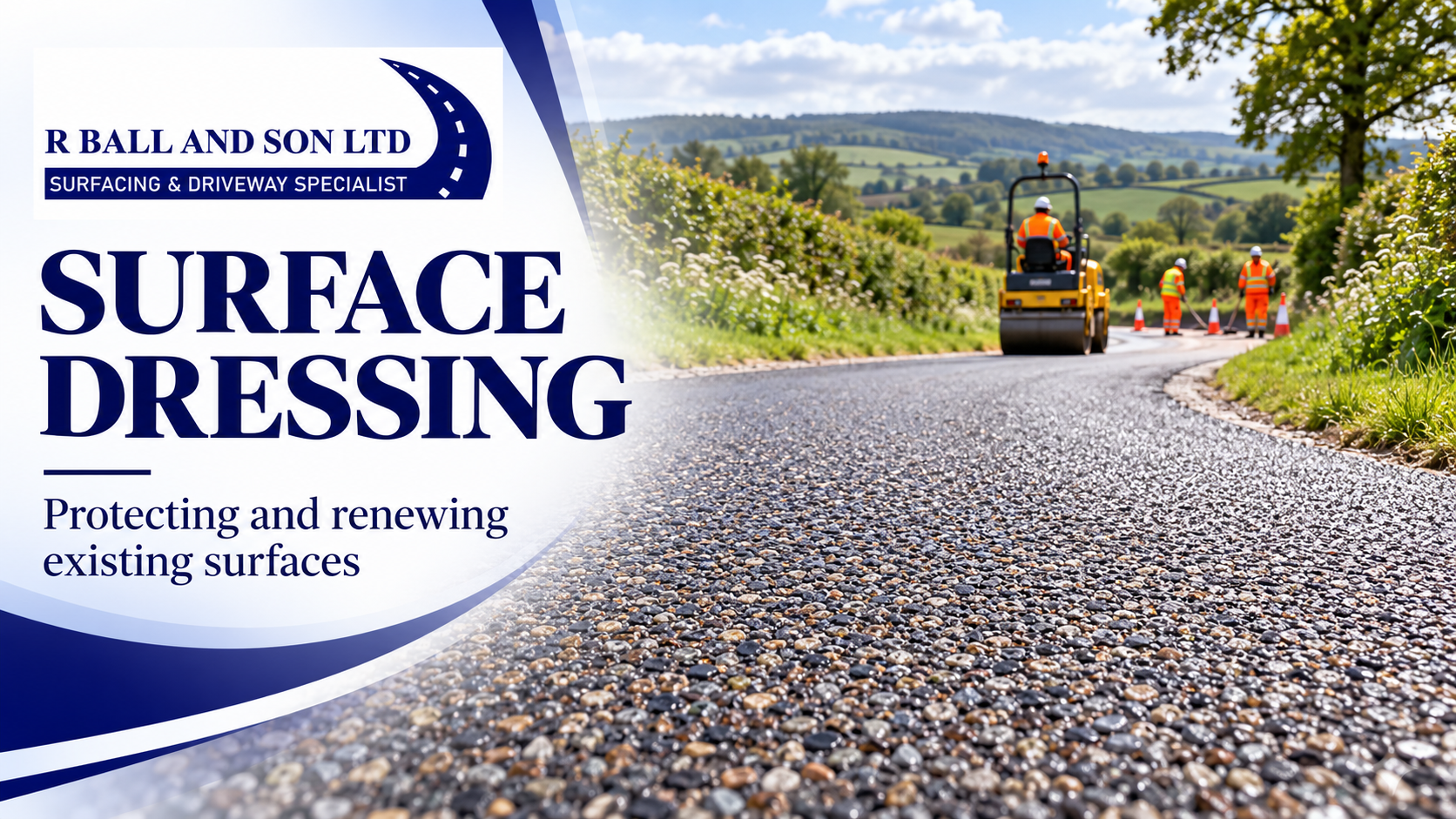
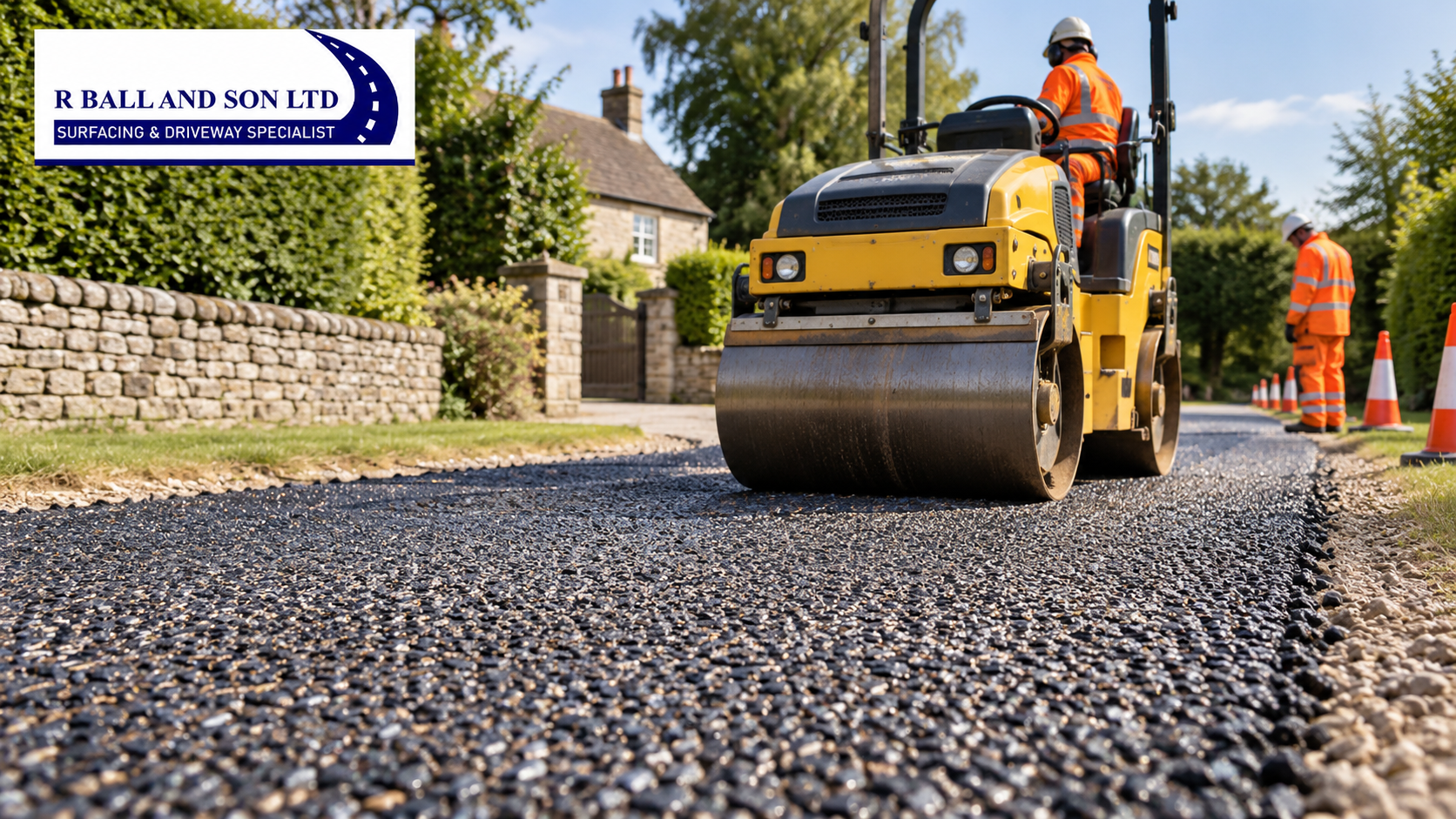
The treatment involves applying a bituminous binder to a prepared surface, followed by stone chippings. Rolling helps embed the aggregate into the binder, creating a textured wearing surface. Excess loose chippings are subsequently removed by sweeping.
The binder and aggregate need to work together. Selecting a suitable specification and preparing the existing surface are important parts of the process. A site assessment helps establish whether surface dressing is appropriate before work is proposed.
Main Benefits of the Treatment
When correctly specified for a suitable site, surface dressing can help preserve the existing pavement. Its benefits relate mainly to protecting the upper surface rather than correcting faults throughout the underlying construction.
- Renewed surface texture: Suitable aggregate can improve skid resistance on a worn surface. Performance depends on the materials, application and conditions, rather than appearance alone.
- Reduced water penetration: The binder provides a seal that helps limit water entering the existing surface, supporting protection against moisture-related deterioration.
- Support against weathering: Limiting water ingress can help reduce the conditions that contribute to freeze–thaw damage. It does not make a surface immune to frost or other deterioration.
- Preventative maintenance: Treating an appropriate surface before substantial deterioration develops can help extend its useful life and postpone more extensive intervention.
How Does It Differ from Resurfacing?
The terms describe different approaches. Surface dressing adds a relatively thin protective treatment, while resurfacing generally involves laying a new surface course. The right choice depends on the defects and the condition of the existing construction.
Protecting a Suitable Surface
A binder-and-chipping treatment is primarily preventative. It is considered where the existing pavement remains suitable for treatment and any necessary preparatory repairs can be addressed.
Addressing More Extensive Wear
A new surface course or deeper repairs may be needed where defects exceed what a thin treatment can resolve. Inspection should guide the recommendation rather than price alone.
Is Your Road or Drive Suitable?
Surface dressing should not be treated as a universal answer to potholes, settlement or widespread structural damage. Significant defects may need repair first, or a different surfacing approach may be more appropriate.
For a private drive or access road, explain how the area is used, the vehicles it carries and any drainage concerns. Turning movements, gradients and the existing finish are also useful matters to discuss during an assessment.
Explore the R Ball and Son Ltd resurfacing and driveway service to start a conversation about the options for your property.
What to Discuss Before Work Begins
A clear proposal should explain the recommended treatment, preparation and practical arrangements. Before booking surface dressing, ask how the contractor will manage access and what aftercare your site will require.
- Existing defects and drainage: Point out potholes, recurring cracks, uneven areas or standing water. Ask which issues need separate attention before the proposed treatment.
- Preparation and materials: Confirm the areas included, any preliminary repairs and the proposed finish. Make sure quotations cover a comparable scope when reviewing different options.
- Access and weather: Discuss parking, deliveries and access to neighbouring properties. Ask how unsuitable weather could affect the programme and how changes would be communicated.
- Sweeping and handover: Establish who will remove excess chippings, whether return visits are included and what instructions apply before normal use can resume.
Use our contact page to share your location, photographs and project requirements.
Frequently Asked Questions
Will this treatment repair deep potholes?
It is not a substitute for structural repairs. Potholes and other significant defects need assessment and may require preparatory work or a different treatment altogether.
Why are there loose stones after the work?
Some excess chippings can remain after application. Sweeping forms part of the treatment process, and further removal may be necessary as the surface settles.
How long will the treated surface last?
Service life varies with the original condition, specification, traffic, drainage and maintenance. Ask for advice based on your site rather than relying on a fixed lifespan for every project.
What information should I send with an enquiry?
Include your location, approximate area, photographs and a description of any damage. Explain how the surface is used and mention access or drainage concerns.
Discuss the Right Treatment for Your Surface
Considering surface dressing for an existing road or drive? Explore our surfacing and driveway service and contact R Ball and Son Ltd with your location and project details to discuss the next step.
