
Resin Bound Surfacing & Tennis Court Surface Options
Choosing the right surface is an important part of any tennis court or external surfacing project. Different court materials can influence appearance, maintenance and gameplay, while surrounding areas also need a practical and professionally finished surface.
Choosing the Right Surface for a Tennis Court
Tennis courts can be designed using several different surface types. The choice does not simply change how the court looks; it can also influence ball speed, bounce, maintenance requirements and the overall playing experience.
Clay, grass and hard courts all offer different characteristics, which means the most suitable option will depend on how the court will be used and the type of playing experience required.
For suitable surrounding external areas, R. Ball and Son Ltd also provides resin bound surfacing , helping create a smart and practical finish around appropriately specified outdoor spaces.
Understanding the Main Tennis Court Surface Types
Each tennis court surface behaves differently. Some encourage slower rallies and a higher bounce, while others produce a faster game. Maintenance requirements can also vary significantly.
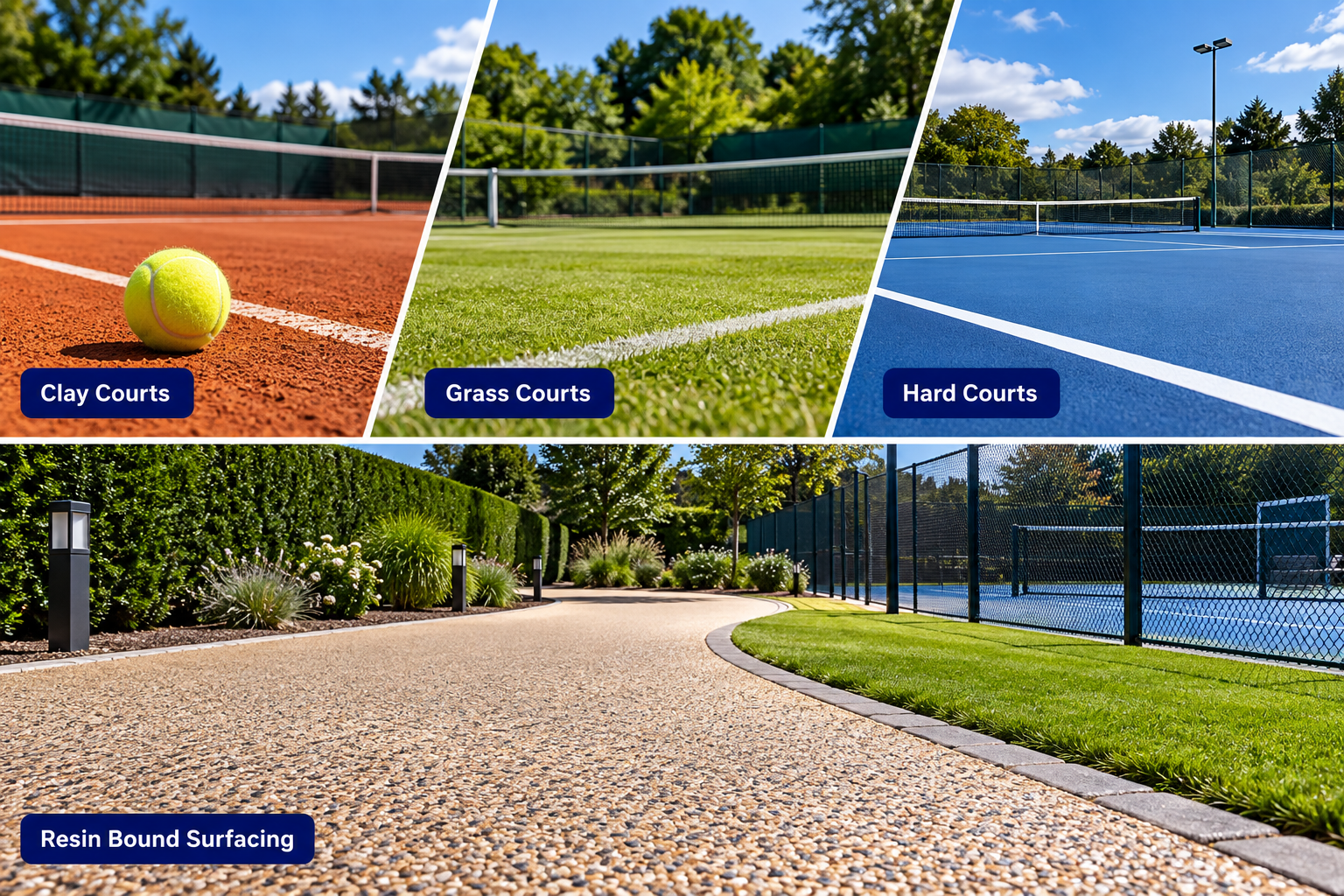
Clay Courts
Clay courts are traditionally made using crushed shale, brick, stone or similar materials. They are associated with a slower game and a comparatively high bounce.
Grass Courts
Grass courts are one of the most traditional tennis surfaces and are famously associated with Wimbledon, although they require significant ongoing maintenance.
Hard Courts
Hard courts are created using a firm base with a specialist surface layer, providing a consistent and practical playing environment.
Clay Tennis Courts
Clay courts are typically formed from crushed shale, brick, stone or similar materials. One of their most recognisable characteristics is the way the ball reacts after striking the surface.
Players can generally expect a higher but slower bounce than on some other surfaces. This can encourage longer rallies and may particularly suit players who prefer to play from the baseline.
Grass Tennis Courts
Grass has been used for tennis for many years and remains one of the sport’s most recognisable surfaces. Wimbledon is perhaps the best-known example of professional grass court tennis.
The appearance of a well-maintained grass court can be extremely attractive, particularly in traditional or landscaped surroundings.
However, natural grass requires regular maintenance to remain suitable for play. This higher maintenance requirement is one of the main reasons why some owners consider alternative surfaces.
Hard Tennis Courts
Hard courts are constructed using rigid materials before being finished with a specialist playing surface, often involving an acrylic system.
The result can provide a consistent playing environment and a different maintenance profile from natural grass or loose clay surfaces.
Their firm construction has made hard courts a common choice for many tennis facilities where predictable playing conditions are important.
How Does the Court Surface Affect Gameplay?
The material beneath the player’s feet has a direct influence on the way the tennis ball behaves. Surface hardness, friction and texture all affect ball movement following a bounce.
This means changing court surfaces can noticeably alter the pace and feel of a match.
- Clay generally creates a slower, higher bounce
- Grass can support a faster style of play
- Hard courts provide a consistent surface
- Maintenance needs differ between systems
- Surface condition affects playability
- Intended use should guide surface selection
What Is Resin Bound Surfacing?
Resin bound surfacing is created by mixing selected aggregate with resin before the material is applied to a suitably prepared base.
Because the aggregate and resin are mixed together before application, the completed surface has a consistent aggregate appearance rather than loose stones sitting on top.
For suitable exterior projects, professional resin bound surfacing can provide an attractive option where a clean and coordinated finish is required.
Where Can Resin Bound Surfacing Be Considered?
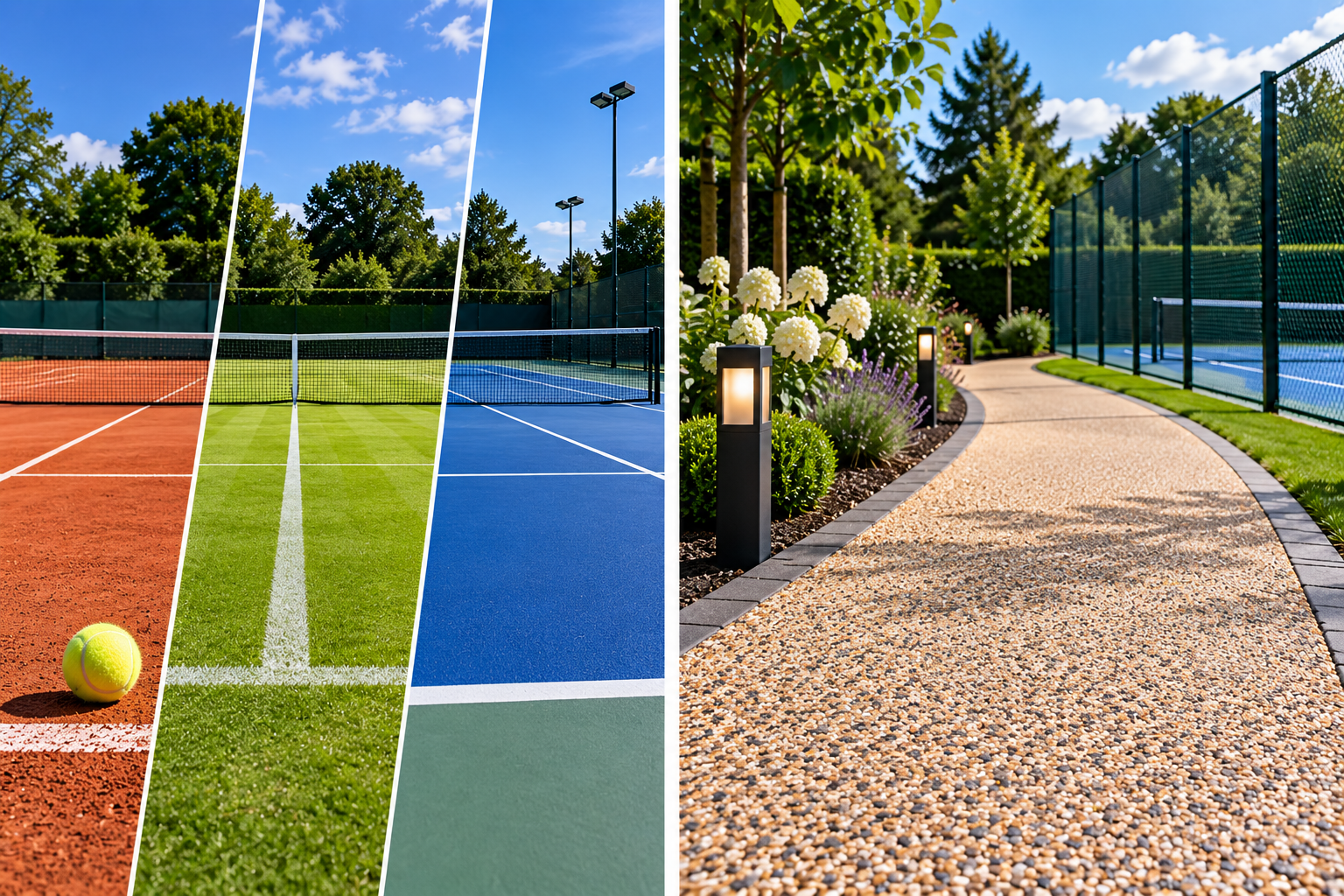
Tennis courts and leisure facilities often involve more than the playing surface itself. Paths, access areas and surrounding landscaped spaces also need to be planned carefully.
Resin bound surfacing is a separate exterior surface from specialist tennis court systems, but it can be considered for suitable surrounding areas depending on the project specification and intended use.
Its aggregate finish can work well alongside landscaping and other external materials, helping to create a coordinated appearance across the wider project.
Why Proper Surface Preparation Matters
The appearance of the finished surface is only one part of a successful installation. The condition and suitability of the underlying base are also important.
Before surfacing work begins, the existing area should be assessed so that preparation can be planned appropriately. Installing a new finish over an unsuitable base can compromise the final result.
Professional preparation therefore plays an important role in achieving a neat and dependable finished surface.
What Should You Consider Before Choosing a Surface?
The best surface depends on the purpose of the area, expected level of use and the maintenance that can realistically be provided.
- How the finished area will be used
- Required playing characteristics
- Expected foot or sports traffic
- Maintenance requirements
- Existing base condition
- Desired appearance
- Site and drainage conditions
- Relationship with surrounding landscaping
Planning the Complete Tennis Court Environment
A successful tennis court project should consider both the playing area and the spaces around it.
The court itself requires a specialist surface suited to the desired type of tennis, while surrounding access routes and landscaped areas need materials appropriate to their own function.
Site Assessment
Review the existing area, intended use and available space before deciding on the final specification.
Surface Selection
Compare court characteristics, appearance and maintenance requirements.
Preparation
Prepare the court and associated exterior areas according to the chosen system.
Installation
Complete the specialist playing and surrounding surfaces using the appropriate installation process.
Why Professional Installation Matters
Good surfacing work depends on correct preparation, appropriate materials and careful installation.
Professional assessment allows the proposed surface to be considered alongside the existing base, intended use and wider site conditions before work begins.
Find out more about R. Ball and Son Ltd’s resin bound surfacing service and discuss the requirements of your external surfacing project.
Frequently Asked Questions
What are the main types of tennis court surface?
Common options include clay, grass and hard court systems. Each provides different playing characteristics and maintenance requirements.
What type of bounce does a clay court provide?
Clay generally produces a comparatively high but slower bounce, which can encourage longer rallies.
Why are grass courts considered high maintenance?
Natural grass requires regular care to maintain the quality and consistency expected from a playing surface.
What is a hard tennis court?
A hard court typically uses a rigid base finished with a specialist surface layer designed to provide consistent playing conditions.
What is resin bound surfacing?
Resin bound surfacing uses aggregate mixed with resin before application to a prepared base, creating a consistent aggregate finish.
Considering Resin Bound Surfacing for Your Project?
Choosing the right exterior surface starts with understanding the intended use, existing base and overall appearance required for the finished space.
Contact R. Ball and Son Ltd to find out more about professional resin bound surfacing for suitable external projects.
View Resin Bound Surfacing